
Because of leverage, CFD positions can lose value faster than the market moves.
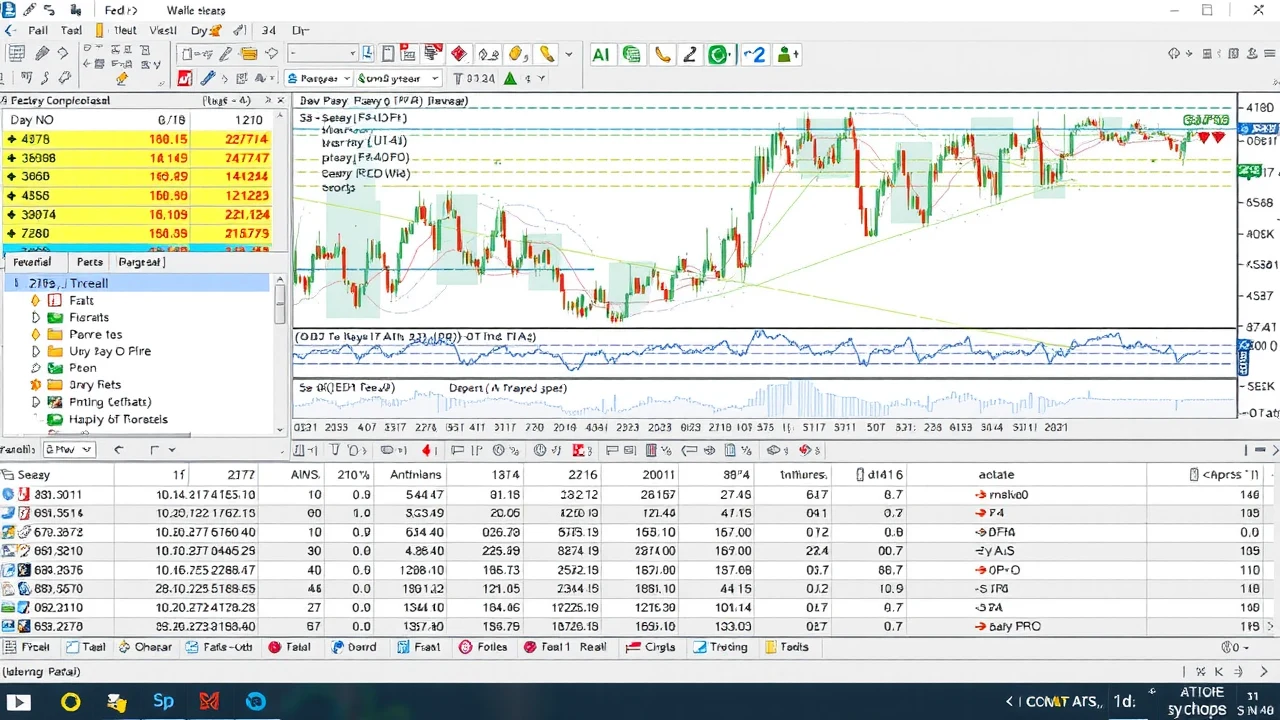
Alice Blue does not offer MetaTrader 5. None of its platforms run MT4 or MT5 either. What the broker gives you instead is its in-house ANT stack: the ANT (Analysis and Trade) mobile app, a web terminal and a desktop build, with ANT MOBI handling the phone side. That is the whole platform menu, and it is worth knowing before you sign up expecting an MT5 chart on your screen.
The rest of the setup is a standard Indian discount-broker package. Accounts are Demat plus Trading on a flat brokerage plan, funding runs through UPI and net-banking with no fixed minimum, and the base currency is INR. Instruments cover equity, F&O, currency, commodity, mutual funds and IPO. MetaTrader simply is not part of it.
From a phone-first angle, that matters more than it sounds. Most traders in India now open, fund and monitor positions entirely from an app, so platform quality on a small screen decides the experience. Alice Blue's ANT mobile app is the whole product for that crowd.
What the ANT platforms do well
On mobile, ANT is built for the Indian market rather than adapted from a global template. You get equity, F&O and commodity in one app, order placement in INR with no currency conversion, and UPI funding that clears near-instantly through PhonePe or Google Pay. Compared to the industry standard, where a global broker typically asks for a bank wire or card, that is a genuinely smoother first mile.
Costs are the second strength. Delivery is Rs.20 per order or 2.5%, whichever is lower, and intraday and other segments are Rs.20 per order or 0.05%, again whichever is lower. Zero AMC has applied since 12 September 2024, and account opening plus the first year are free. Most discount brokers in India cluster around similar flat-fee structures, so this sits at market level rather than above or below it.
Where the platforms fall short
The gap against MetaTrader is structural, not cosmetic. MT5 ships with a built-in strategy tester, a full Expert Advisor engine and support for custom indicators written in MQL5. Alice Blue's ANT platforms do not list any of that in the broker's own material, and we have not verified automated strategy support or third-party indicator imports there. If your workflow depends on those, ANT will feel like a locked room.
The other difference is portability. MetaTrader is a standard: a strategy built in MT5 moves between brokers with little friction. An in-house platform ties your setup to one broker. Switch, and you rebuild.
Isolated complaints about chart settings and execution show up in app-store reviews. No major SEBI action against the broker was verified at the time of our review, so this reads as polish-level friction rather than a regulatory problem. Still, for a chart-heavy intraday style, small default settings add up over a session.
Who actually needs MetaTrader
MetaTrader earns its reputation among a specific crowd, and it is worth being honest about whether you are in it.
- You run Expert Advisors or any automated strategy that needs a tester and MQL5.
- You have built custom indicators and want to port them between brokers.
- You backtest over years of tick data before risking capital.
- You want one charting standard you can carry to a new broker without relearning.
If none of those apply, and you trade equity, F&O or commodity from a phone, ANT covers the job. The industry benchmark for retail app trading is set by brokers with native mobile apps, not by desktop terminals, so a well-built app is not a downgrade for that style.
The nuance most people miss: MetaTrader is a platform, not a market. Having MT5 does not by itself give you access to Indian exchange-traded currency derivatives. That access comes from exchange membership, which is a separate question from which terminal you click in.
Picking a broker with MetaTrader
For Indian residents the regulatory picture needs one calm paragraph, because it shapes which brokers are even worth shortlisting. Trading spot forex or CFDs with offshore brokers is not permitted for residents, and remitting funds abroad for margin forex trading is not a permitted LRS purpose. Exchange-traded INR currency derivatives on NSE, BSE or MSE are the legal route, and the RBI publishes an Alert List of unauthorised forex platforms, 95 entities as of the 19 November 2025 update, which the RBI itself describes as not exhaustive.
What that means in practice: a MetaTrader broker is worth considering for the products you can legally trade, and the regulatory standing of the entity is the filter, not the logo. Things to weigh:
- Strong regulation at the level of FCA, CySEC or ASIC, not just an offshore registration.
- Client fund segregation, stated clearly and not buried.
- Transparent commission and spread tables you can check before funding.
- A track record measured in years, not months.
- Support you can actually reach during Indian trading hours.
FxPro, with which this site has a partnership, is an international broker offering MetaTrader 4, MetaTrader 5 and cTrader. If MT5 is the reason you landed on this page, that is the practical route from here, and the site button takes you to the details.
Things to keep in mind
Costs are not the issue here. The flat Rs.20 structure is competitive, and a zero AMC removes the annual drag that many brokers still charge. What deserves a second look is the fit between your workflow and the platform.
On taxes, exchange-traded currency futures and options profits are generally treated as non-speculative business income and taxed at your slab rate. Intraday speculative positions are treated separately, with losses set off only against speculative income and a four-year carry-forward, against eight years for non-speculative losses. A 20% TCS applies on LRS remittances above Rs.10 lakh per financial year, and residents must declare worldwide income and foreign assets under Schedule FA. None of this is a reason to avoid trading; it is a reason to keep clean records.
KYC to open an exchange-linked account needs a PAN card, plus Aadhaar, address proof and bank proof. Approval usually lands in 24 to 48 hours. Islamic or swap-free accounts are not offered, which rules Alice Blue out for traders who need that structure.

When to walk past this one
Alice Blue is a reasonable fit if you trade Indian equities, F&O or commodity, want flat Rs.20 pricing with zero AMC, and are happy doing it all from the ANT app on your phone. The SEBI registration and CDSL depository ID are real and checkable, the funding rails are local, and the cost structure is at market level. For that trader, the missing MT5 costs nothing.
It is unreasonable if MetaTrader is the requirement rather than a preference. Automated strategies, custom MQL5 indicators and multi-year backtesting are not served by ANT, and no amount of app polish fixes that. The same applies if you need a swap-free account, or if you want a platform you can carry to another broker later. In those cases, look at a strictly regulated international broker that runs MT4 or MT5, check its entity and client-fund rules against the criteria above, and confirm the products you intend to trade are ones you can legally access from India.
Platform choice is reversible. Funding an account built for the wrong workflow is not, so decide the platform question first.
Questions
What can I trade on the ANT app?
Equity, F&O, currency, commodity, mutual funds and IPO, settled in INR through UPI or net-banking. Delivery costs Rs.20 per order or 2.5%, and intraday Rs.20 per order or 0.05%, whichever is lower.
Do I need MT5 to trade currency derivatives in India?
No. Exchange-traded INR currency derivatives on NSE, BSE or MSE are accessed through a SEBI-registered broker's own platform. MetaTrader is a terminal choice, not a requirement for that market.
Does Alice Blue have MetaTrader 5?
No. Alice Blue does not offer MT4 or MT5. Its platforms are the ANT (Analysis and Trade) mobile app, a web terminal and a desktop build, with ANT MOBI for mobile trading.